Understanding Load Banks for Generator Testing and Power System Validation
Load banks are essential tools in the testing and validation of power generation systems, including diesel generators, gas turbines, and renewable energy sources like wind and solar. These devices simulate real-world electrical loads to ensure that power systems operate reliably under full or partial load conditions. In industrial and utility applications, load banks help verify generator performance, validate cooling and fuel efficiency, and confirm compliance with standards such as IEC 60034-1 (rotating machines) and IEEE 1547 (distributed energy resources).
Resistive load banks absorb active power only, making them ideal for testing engine torque, alternator output, and thermal stability. Reactive load banks, on the other hand, simulate inductive or capacitive loads—common in motors, transformers, and power factor correction circuits. A combination RLC load bank offers flexibility by adjusting both resistive and reactive components, enabling comprehensive testing across various power factors. Portable three-phase load banks are widely used in field applications such as factory acceptance tests (FAT), site commissioning, and microgrid integration scenarios.
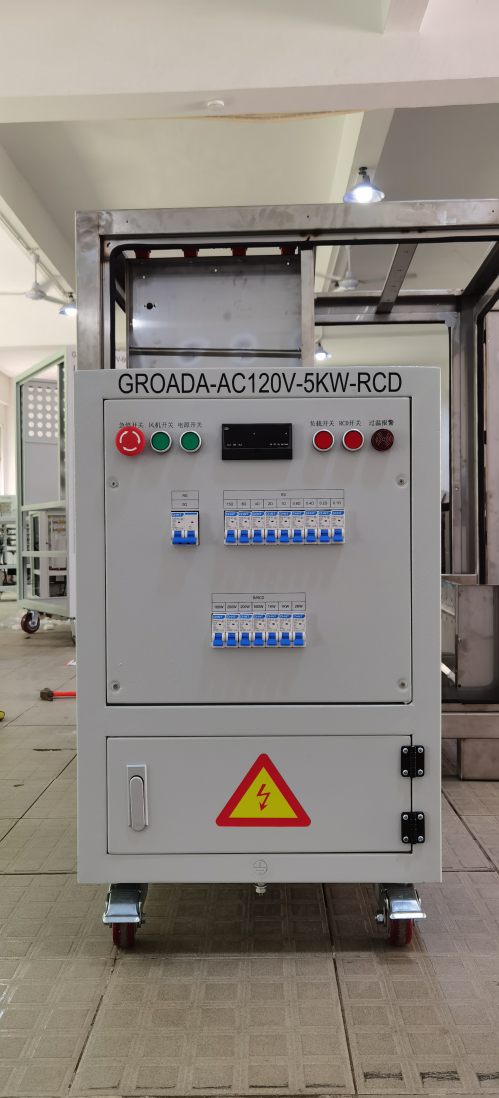
Modern load banks incorporate advanced control systems, including Modbus TCP/IP, CAN bus, and RS-485 interfaces for remote monitoring and automation. They often feature built-in sensors for voltage, current, power, and temperature measurement with accuracy within ±0.5%. Safety is critical—equipment must comply with CE, UL, and CCC certifications, with features like emergency stop buttons, overtemperature protection, and short-circuit safeguards. Thermal management typically uses forced air cooling or water-cooled systems, depending on kW capacity.
A simulated case study from a utility-scale solar farm shows how a 500 kW resistive load bank validated generator backup during grid failure simulations. Over a 4-hour test period, the system maintained stable voltage regulation (±2%) and sustained peak load without overheating. This confirmed the reliability of the generator set prior to commercial operation. Similarly, an anonymized case from a data center illustrates how a 3-phase reactive load bank helped fine-tune UPS battery performance under varying power factor conditions, improving system efficiency by 7%.
Regular calibration every 12 months using certified equipment ensures measurement accuracy. Key maintenance tasks include inspecting resistor blocks, cleaning fans, and checking grounding integrity. Spare parts such as fuse modules, fan assemblies, and sensor probes should be kept on-site for rapid repair. With proper use and maintenance, load banks provide long-term value in ensuring power quality, safety, and operational readiness across industries—from hospitals to offshore platforms.