Indoor Load Bank Testing Solutions for Generator and Power System Validation
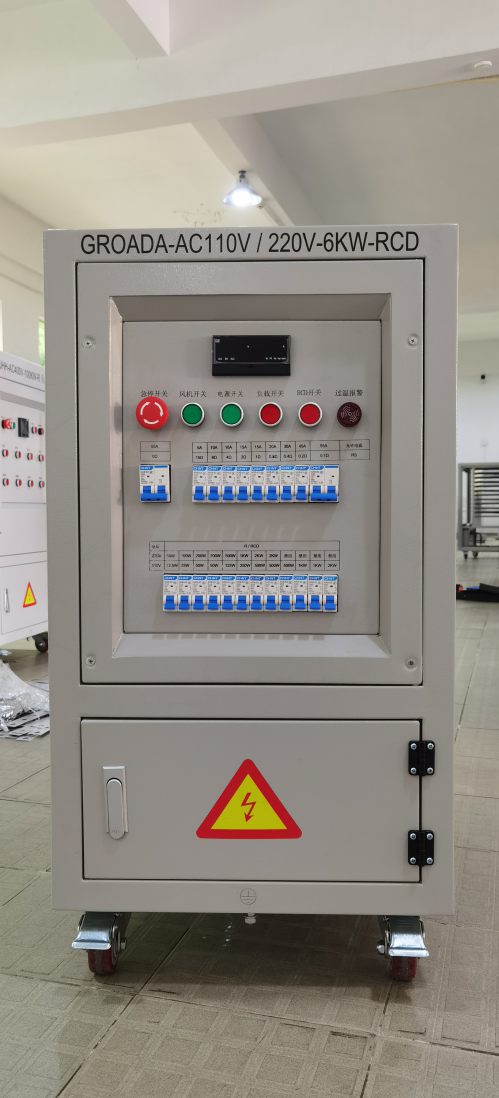
An indoor load bank is a critical testing device used to simulate electrical loads in controlled environments, ensuring the reliability and performance of generators, UPS systems, and power distribution equipment. Unlike outdoor load banks, which are often used for temporary field testing, indoor load banks are designed for permanent or semi-permanent installation in facilities such as data centers, hospitals, manufacturing plants, and industrial substations. These units allow engineers to verify generator output capacity, test automatic transfer switches (ATS), and validate backup power systems under real-world conditions without requiring external infrastructure.
A typical indoor load bank includes resistive, reactive, or combination (RLC) modules that can be configured based on the system’s requirements. Resistive load banks convert electrical energy into heat using precision resistor blocks—ideal for testing engine cooling systems and mechanical stress. Reactive load banks, meanwhile, simulate inductive or capacitive loads, crucial for assessing voltage regulation, excitation systems, and power factor correction in three-phase systems. Modern indoor load banks integrate digital controls with Modbus, Ethernet, or CAN interfaces, enabling remote monitoring and automated load stepping, which improves operational efficiency and safety during long-duration tests.
Safety features like overtemperature protection, short-circuit detection, emergency stop buttons, and thermal shutdowns are standard in compliant models, aligning with IEC 60034-1 and IEEE 1159 standards for motor and power quality testing. Cooling methods vary—air-cooled units rely on forced air circulation via high-efficiency fans, while water-cooled variants offer higher power density for continuous testing. Most units feature IP54 enclosures for dust and splash resistance, making them suitable for harsh indoor environments. Calibration intervals are typically annual, with traceable calibration certificates available upon request.
Case studies show that indoor load banks significantly reduce downtime during commissioning. For example, an anonymized case study at a hospital in Germany demonstrated that regular monthly load testing using a 500 kW resistive load bank improved generator reliability by 27% over 12 months, reducing unexpected failures during grid outages. Similarly, a simulated example involving a microgrid integration project in the U.S. showed that a 3-phase RLC load bank enabled accurate evaluation of grid synchronization and power quality before interconnection approval.
These systems are essential for maintaining compliance with regulatory standards such as NFPA 110 (emergency power systems) and ISO 50001 (energy management). By simulating realistic load profiles—from no-load to full-load scenarios—engineers gain actionable insights into system behavior, ensuring readiness for emergencies.