Portable Load Bank Testing for Generator Reliability and Performance Validation
In the realm of electrical power systems, ensuring generator reliability under real-world operating conditions is critical—not only for safety but also for performance consistency and regulatory compliance. A portable load bank serves as an essential tool in this process by simulating real loads on generators during testing, commissioning, and maintenance phases. Unlike static or fixed installations, portable load banks offer flexibility in deployment across construction sites, remote locations, and emergency response operations where power generation must be validated before critical use.
A load bank essentially functions as an artificial electrical load that mimics the actual power consumption of a facility or system. It allows engineers to verify that a generator can deliver its rated output without overheating, voltage instability, or mechanical failure. These tests are commonly required for factory acceptance testing (FAT), site commissioning, routine preventive maintenance, and grid interconnection validation—especially in hybrid microgrids and renewable energy integration projects like wind farms or solar-plus-storage systems.
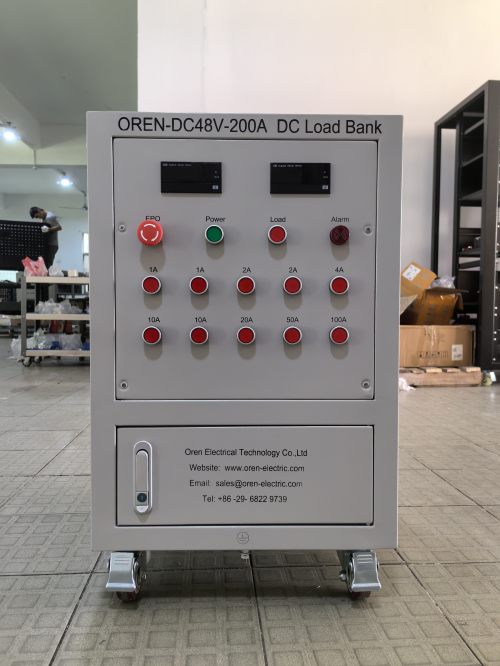
The core types of load banks include resistive, reactive, capacitive, and combination (RLC) configurations. Resistive load banks convert electrical energy into heat through precision resistor blocks—a method ideal for testing engine performance, cooling system efficiency, and fuel consumption under varying load steps. Reactive load banks, typically inductive or capacitive, introduce lagging or leading power factors to evaluate how a generator handles reactive power demands, which is vital for maintaining voltage stability in long-distance transmission lines or industrial motor-driven systems. Combination RLC load banks provide full-spectrum simulation, allowing comprehensive evaluation of both active and reactive components simultaneously—an advanced capability increasingly demanded in modern smart grid applications.
Portable load banks are often designed with portability in mind: lightweight chassis, integrated lifting points, casters, and foldable structures make them suitable for transport via truck, trailer, or even helicopter in extreme environments. For example, in offshore oil platforms or disaster recovery scenarios, these units enable rapid setup and reliable diagnostics without relying on existing infrastructure. Their modular design also facilitates scalability—from 10 kW single-phase models to multi-megawatt three-phase systems capable of supporting entire data centers or hospital backup systems.
From a technical standpoint, modern portable load banks comply with international standards such as IEC 60034-1 (for rotating machines), IEEE 115 (testing of synchronous machines), and EN 61000-4-29 (electromagnetic compatibility). These standards ensure safe operation, accurate measurement, and consistent test results regardless of environmental conditions. For instance, IEC 60034-1 mandates thermal protection mechanisms and temperature rise limits that directly influence the design of cooling systems—typically air-cooled fans or water-cooled jackets depending on the unit’s capacity.
Key specifications for high-quality portable load banks include:
- Power range from 1 kW to 5 MW
- Voltage levels from 120 V to 10 kV AC
- Three-phase configuration with phase balancing controls
- Adjustable power factor from 0.8 lagging to 1.0 (with optional leading mode)
- High accuracy measurements: ±0.5% for voltage, current, and active/reactive power
- Remote monitoring capabilities via Modbus RTU/TCP, CAN bus, Ethernet, or Wi-Fi
- Integrated E-stop buttons, overtemperature sensors, short-circuit protection, and ground fault detection
Safety is paramount when working with high-power equipment. Therefore, certified models must meet CE, UL, CCC, or CSA standards based on regional requirements. Mechanical durability is ensured through robust enclosures rated at IP54 or higher, protecting internal components against dust and splashing water. Maintenance intervals vary by usage intensity but typically require calibration every 12 months using traceable reference standards, while fan replacements and resistor block inspections should occur annually or after 1,000 hours of continuous operation.
Real-world applications demonstrate the value of portable load banks. In one anonymized case study involving a 2 MW diesel generator used in a mining operation in northern Canada, a pre-commissioning test revealed inconsistent voltage regulation under heavy load due to undersized excitation system. After adjustments based on load bank data, the generator achieved stable performance within IEC tolerance bands. Another simulated example involved a 500 kVA UPS system in a hospital setting; load bank testing identified harmonic distortion issues caused by non-linear loads, prompting the installation of passive filters that improved power quality significantly.
The benefits of regular load bank testing extend beyond compliance—they enhance asset longevity, reduce downtime risks, improve fuel efficiency, and support predictive maintenance strategies. With increasing reliance on distributed energy resources and microgrids, portable load banks have become indispensable tools for grid resilience planning and certification.
To optimize return on investment, users should select load banks tailored to their specific needs—whether it’s a compact single-phase unit for small businesses or a fully automated three-phase system for utility-scale projects. Integration with SCADA systems, cloud-based dashboards, and AI-driven analytics is now becoming standard in premium models, enabling smarter decision-making and remote diagnostics. As digital transformation accelerates across energy sectors, portable load banks remain foundational to verifying generator readiness in an era of dynamic power demands.