Resistive Load Bank Testing for Generator Validation and Power System Reliability
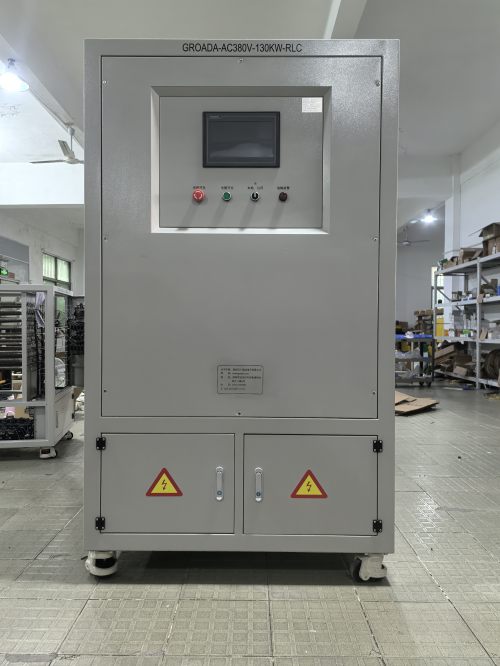
Resistive load banks are essential tools in electrical engineering for validating generator performance, testing uninterruptible power systems (UPS), and ensuring grid stability. These devices simulate real-world electrical loads by converting electrical energy into heat through resistive elements, allowing engineers to test equipment under controlled conditions without relying on actual consumer loads. This makes them ideal for factory acceptance testing (FAT), commissioning, and preventive maintenance of diesel or gas-powered generators used in hospitals, data centers, and industrial facilities.
A typical resistive load bank operates by drawing current from the source at a power factor close to 1.0, enabling precise measurement of active power (kW) output. For three-phase systems, balanced loading across all phases ensures uniform thermal stress and prevents phase imbalance issues that could compromise generator longevity. According to IEC 60034-1, synchronous machines must undergo full-load tests to verify torque-speed characteristics—resistive load banks provide this capability safely and reproducibly.
Modern portable resistive load banks often feature digital control panels with Modbus RTU or Ethernet interfaces, allowing remote monitoring of voltage, current, temperature, and power factor. They typically include built-in thermal protection, short-circuit detection, and overvoltage/undervoltage safeguards compliant with UL 1598 and CE standards. Some models also offer automatic load stepping (e.g., 25%–50%–75%–100%) to simulate gradual startup scenarios found in real-world operations.
In an anonymized case study from a hospital backup power system test, a 500 kW three-phase resistive load bank was used to validate a diesel generator’s ability to sustain critical load during extended outages. The test lasted four hours at 100% load, with continuous logging of engine temperature, fuel consumption, and voltage regulation. Results showed stable operation within ±2% voltage variation and confirmed the generator's readiness for emergency use.
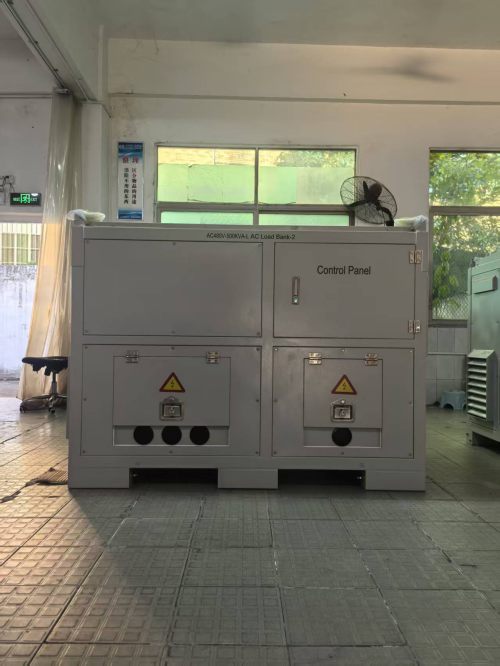
Safety remains paramount—load banks must be installed in well-ventilated areas, with adequate clearance for heat dissipation. Cooling methods vary: air-cooled units rely on forced-air fans rated for 30–60°C ambient temperatures, while water-cooled systems are preferred for high-power applications (>1 MW). Regular calibration every 12 months using NIST-traceable instruments ensures accuracy of measurements, especially for utility-scale projects requiring compliance with IEEE 1159 standards.
For optimal results, select a load bank matching your generator’s kVA rating, with sufficient headroom (typically 10–15%) to accommodate transient peaks. Always verify grounding integrity and install emergency stop switches accessible to operators. With proper use, resistive load banks not only ensure system reliability but also extend asset life by identifying potential failures before they occur.