Portable Load Bank Testing for Generator and UPS Systems
Portable load banks are essential tools for verifying the performance, reliability, and safety of electrical power systems such as generators, uninterruptible power supplies (UPS), and renewable energy inverters. These devices simulate real-world electrical loads to test how a system responds under various conditions—from no-load to full-rated capacity—ensuring it meets operational standards before deployment or during routine maintenance.
A portable resistive load bank, for example, converts electrical energy into heat through precision resistor blocks and is commonly used in factory acceptance testing (FAT) of diesel or natural gas generators. It allows engineers to validate output voltage regulation, frequency stability, and fuel efficiency under controlled load steps. For more complex systems like microgrids or wind farms, combination RLC (resistive-inductive-capacitive) load banks offer dynamic power factor control, enabling reactive load testing that mimics actual grid conditions.
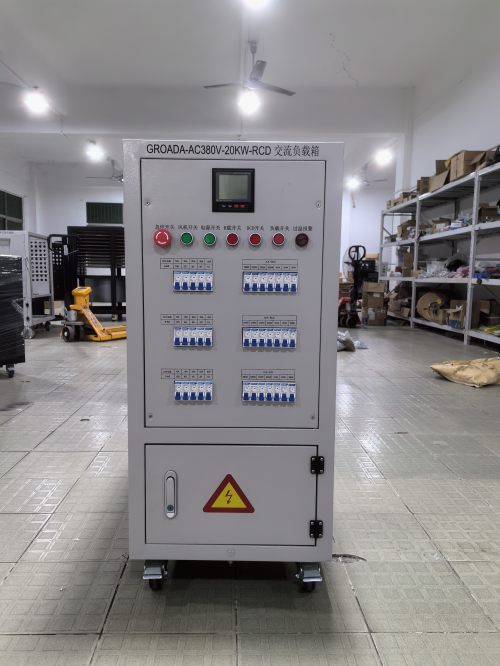
Modern portable load banks often feature digital controls with Modbus RTU or Ethernet interfaces, allowing remote monitoring and automated load ramping. Safety is paramount: certified models include overtemperature protection, emergency stop functions, and grounding compliance with IEC 60364-1 and UL 1008 standards. Thermal management typically involves forced-air cooling using high-efficiency fans rated for continuous operation at 70°C ambient temperature.
In an anonymized case study from a data center in Singapore, a 250 kW three-phase resistive load bank was used to test a new UPS system. The test revealed a 3% deviation in output voltage under 90% load—a red flag indicating poor voltage regulation. After adjusting the AVR (Automatic Voltage Regulator) settings, the deviation dropped below 1%, ensuring reliable power delivery. This demonstrates how portable load testing prevents costly downtime and improves system resilience.
Engineers must also consider portability features such as IP54-rated enclosures, lifting eyes, and forklift pockets when selecting equipment for field use. Regular calibration every 12 months and replacement of resistor blocks every 5 years (based on thermal cycling stress) maintain measurement accuracy within ±0.5% for active power and ±1% for reactive power.