Portable Load Bank Testing Solutions for Generator and Power System Validation
Portable load banks are essential tools for testing the performance, reliability, and safety of generators, UPS systems, and renewable energy installations such as wind turbines or solar farms. These devices simulate real-world electrical loads to ensure that power sources can handle full capacity under various conditions—critical for factory acceptance tests (FAT), commissioning, and routine maintenance.
A well-designed portable load bank typically includes resistive, reactive, or combination (RLC) load elements. Resistive load banks convert electrical energy into heat using high-power resistor blocks, while reactive load banks introduce inductive or capacitive loads to test power factor capabilities. Combination units allow engineers to emulate complex grid behaviors, including harmonic distortion and phase imbalance.
Modern portable load banks often feature remote control via Ethernet, Modbus RTU, or CAN interfaces, enabling automated testing programs and data logging. For example, a 500 kW three-phase resistive load bank may be configured with a ±0.5% accuracy in active power measurement and support automatic thermal shutdown if internal temperatures exceed 85°C—a safeguard required by IEC 60034-1 for motor and generator testing.
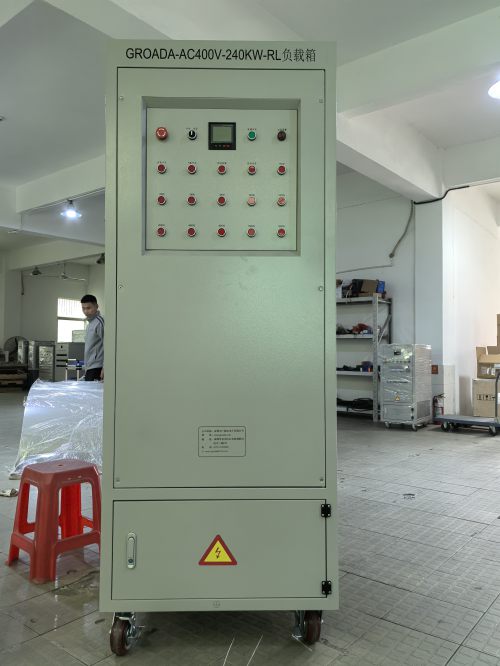
Mechanical design is equally important. Units should have IP54-rated enclosures for dust and splash protection, lifting eyes for safe handling, and fork-lift pockets for transport. Typical weight ranges from 150 kg to 2,000 kg depending on rated power (e.g., 100–1,000 kVA). Cooling is usually air-based, though water-cooled variants exist for high-duty-cycle applications.
Safety features like ground fault detection, overvoltage/undervoltage protection, and emergency stop buttons are standard in certified models (CE, UL, CCC). Calibration must be performed annually per IEEE 1159 guidelines to maintain measurement integrity. Maintenance involves inspecting resistor blocks, cleaning filters, and replacing fans every 2–3 years based on usage intensity.
An anonymized case study from a hospital microgrid project showed that after installing a 300 kVA reactive load bank, the facility achieved 98% load-following accuracy during black-start testing—improving confidence in backup power resilience. Another simulated example involving a wind farm demonstrated how dynamic load testing with a 500 kW RLC load bank helped identify voltage regulation issues before grid interconnection.
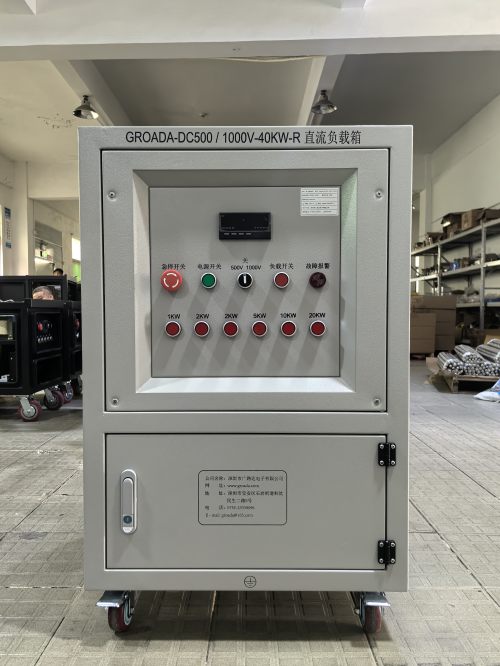
These solutions empower engineers to validate system stability, reduce downtime risk, and comply with international standards like IEC 61400-21 for wind turbine grid integration. Whether used in field service or manufacturing, portable load banks remain indispensable for verifying the true capability of modern power systems.