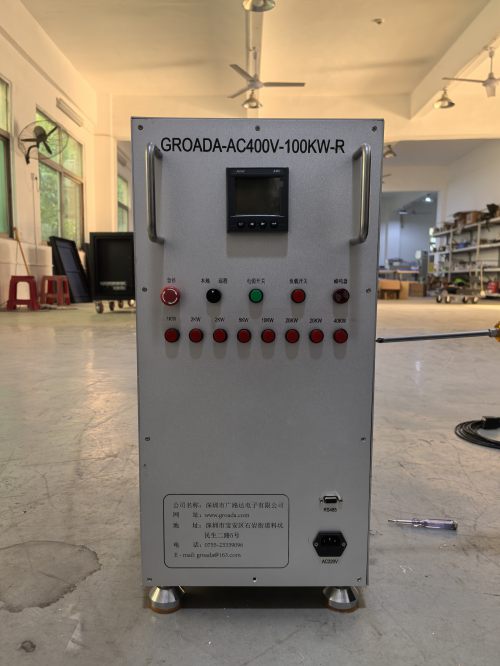
Resistive Load Bank Testing for Generator Validation and Performance Optimization
Resistive load banks are essential tools in the validation and performance testing of generators, UPS systems, and renewable energy sources such as wind turbines and solar inverters. These devices simulate real-world electrical loads by converting electrical energy into heat through resistive elements, allowing engineers to test equipment under controlled conditions without requiring actual power consumption. Practical applications include factory acceptance tests (FAT) for new generator sets, routine maintenance checks on standby power systems, and grid integration testing for microgrids. In one anonymized case study, a 1,000 kVA diesel generator was tested using a three-phase resistive load bank at 80% rated load for 4 hours. The test confirmed stable voltage regulation, consistent frequency response, and no overheating—critical parameters for ensuring reliability during blackouts.
Advantages of resistive load banks include their simplicity, high accuracy, and ease of control via digital interfaces. They allow precise load stepping, enabling gradual ramp-up testing that mimics real-world start-up sequences. Unlike reactive or capacitive load banks, resistive types do not introduce harmonic distortion or phase shifts, making them ideal for baseline diagnostics. Recent trends show increased demand for portable and modular resistive load banks equipped with IoT-enabled monitoring and remote control capabilities. This supports predictive maintenance strategies and reduces downtime in critical infrastructure like hospitals, data centers, and telecom sites.
Common problems include inadequate cooling leading to resistor block failure, improper grounding causing safety hazards, and overloading beyond design limits. IEC 60034-1 and IEEE 1159 standards guide safe operation by specifying thermal limits, short-circuit protection requirements, and insulation integrity. For example, proper IP rating (typically IP54 or higher) ensures dust and water resistance in harsh environments. Maintenance best practices involve annual calibration using NIST-traceable equipment and replacing fan units every 2–3 years depending on usage intensity. A recommended spare parts list includes resistor blocks, thermocouples, and fuse cartridges. By following these protocols, operators ensure long-term reliability and compliance with global safety benchmarks.