Lamp Load Bank for Generator Testing and Power System Validation
A lamp load bank is a specialized type of resistive load bank commonly used in generator testing, power system validation, and field performance verification. Unlike traditional resistive load banks that use large resistor blocks, lamp load banks employ incandescent lamps as the primary load element—offering a simple, reliable, and cost-effective solution for simulating real-world electrical loads. These devices are particularly effective in testing diesel or natural gas generators before commissioning, during maintenance, or after repairs to ensure they can handle full-load conditions without overheating, voltage drop, or instability.
Lamp load banks typically operate on single-phase or three-phase systems and are designed to mimic the resistive component of typical building loads—such as lighting, heating, and small motor applications. Each lamp acts as a fixed resistance, and when connected in parallel across phases, they provide a stable and linear load curve. This makes them ideal for factory acceptance tests (FAT), site acceptance tests (SAT), and periodic load testing required by IEC 60348 and IEEE 1547 standards for distributed energy resources.
One key advantage of lamp load banks is their inherent self-regulation: as temperature increases, the resistance of the filament rises slightly, which naturally limits current draw—a safety feature that reduces thermal stress compared to solid-state resistive banks. However, they do not support reactive power simulation (like capacitive or inductive loads), so they are best suited for resistive-only testing scenarios such as generator sizing, engine cooling validation, and fuel system performance checks.
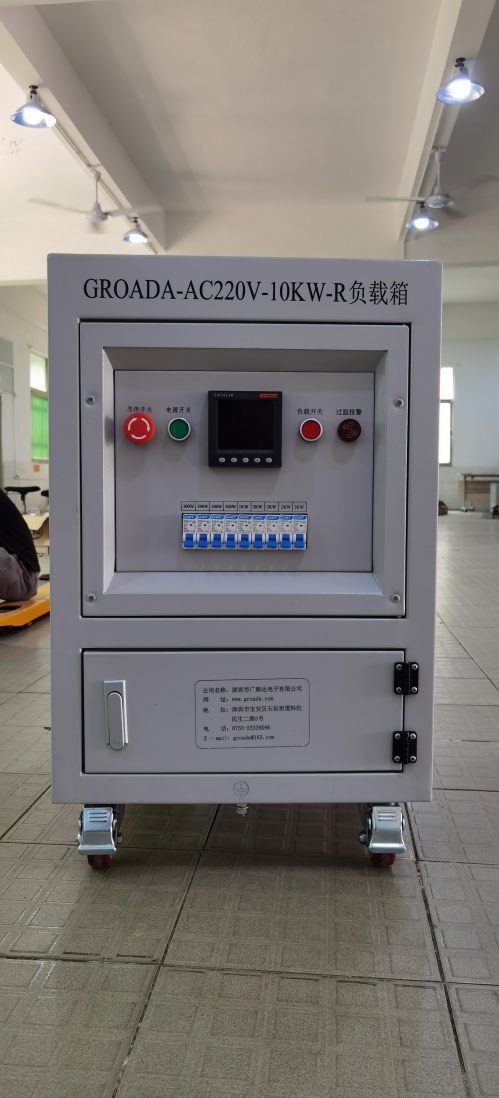
Modern lamp load banks often include digital monitoring interfaces for voltage, current, active power (kW), and power factor, with optional remote control via Modbus or Ethernet. Safety features include overtemperature protection, short-circuit detection, and emergency stop buttons. Mechanical construction typically includes IP54-rated enclosures, fork-lift pockets, and lifting eyes for portability—making them suitable for both workshop and field use.
In an anonymized case study from a mid-sized industrial facility, a 200 kW lamp load bank was used to verify generator performance after a major overhaul. The test ran for 4 hours at 90% load, during which time no significant voltage regulation issues or excessive temperature rise were observed—confirming the unit met IEC 60034-1 requirements for motor-driven generator sets.