Resistive Load Bank Testing for Generator Validation and Power System Reliability
Load bank testing is a critical process used to validate the performance, reliability, and safety of power generation systems—especially generators, UPS units, and renewable energy inverters. A resistive load bank simulates real-world electrical loads by converting electrical energy into heat through high-power resistors. This type of load bank is ideal for assessing engine cooling, alternator output, voltage regulation, and fuel system response under controlled conditions.
Unlike reactive or capacitive load banks, which introduce inductive or capacitive reactance to simulate non-resistive loads (e.g., motors or lighting), a resistive load bank provides a stable, linear load that allows precise measurement of active power (kW) without phase displacement. It is widely used in factory acceptance tests (FATs), commissioning, preventive maintenance, and emergency power system verification.
Modern resistive load banks are available in portable and fixed configurations, with ratings from 50 kW up to 2 MW and voltages ranging from 120 V to 690 V AC. They typically feature three-phase capability, remote monitoring via Modbus or Ethernet, and built-in thermal protection to prevent overheating. Cooling methods include forced air (fan-cooled) or water-cooled systems for high-power applications. Safety certifications such as CE, UL, and CCC ensure compliance with international standards like IEC 60034-1 and IEEE 115.
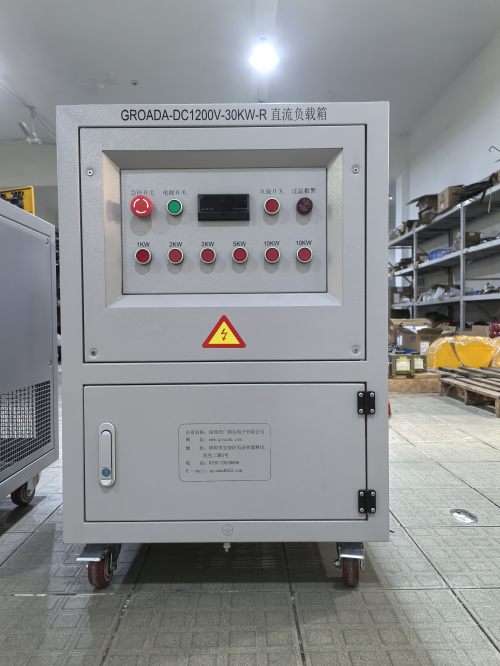
In one anonymized case study, a 1.5 MW diesel generator was tested using a three-phase resistive load bank at 100%, 75%, and 50% load levels over 4 hours. The test revealed inconsistent voltage regulation at partial load due to an aging voltage regulator, which was replaced before grid integration. Another simulated example shows how a solar farm’s inverter system was validated against a 300 kW resistive load bank prior to grid connection, ensuring proper reactive power handling and compliance with utility interconnection requirements.
These systems are not just tools—they’re essential for protecting infrastructure investments, preventing unexpected failures, and ensuring uptime in mission-critical environments like hospitals, data centers, and industrial plants.