Portable Load Bank Testing for Generator Maintenance and Factory Acceptance
Portable load banks are essential tools in the testing and validation of electrical power systems, especially for generators used in critical infrastructure such as hospitals, data centers, and remote industrial sites. These devices simulate real-world electrical loads to ensure that power generation equipment operates reliably under full-load conditions before it is deployed or during routine maintenance. Unlike fixed installations, portable load banks offer flexibility, mobility, and scalability—making them ideal for field applications where space, access, or temporary power needs vary widely.
A resistive load bank is the most common type used in portable configurations. It mimics the behavior of purely resistive loads like heaters or lighting circuits by converting electrical energy into heat through precision resistor elements. For example, a 500 kW resistive load bank can be configured to test a diesel generator rated at 600 kVA at 480 V three-phase. The test duration typically ranges from 1 to 4 hours, depending on the generator’s design and the IEC 60034-1 standard requirements for motor/generator performance verification. During this process, engineers monitor voltage stability, frequency regulation, fuel consumption, and exhaust temperature to confirm that the unit meets manufacturer specifications.
Reactive load banks add another layer of complexity by introducing inductive or capacitive reactance, allowing for power factor correction testing. A typical reactive load bank may have an adjustable power factor range from 0.8 lagging to 0.8 leading, enabling users to simulate both lagging (inductive) and leading (capacitive) loads commonly found in industrial settings. This capability is crucial for testing synchronous generators, which must maintain stable output voltage even when connected to varying types of loads—a requirement enforced by IEEE Std 115 for generator excitation system testing.
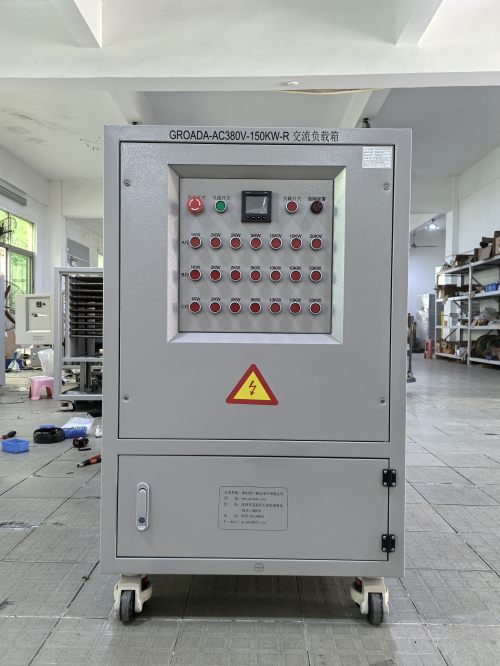
Combination (RLC) load banks integrate resistive, inductive, and capacitive components into a single unit. They provide comprehensive load testing for modern power systems that include both active and reactive power demands. For instance, a 1 MW RLC load bank with remote control via Modbus TCP can be programmed to apply stepwise load increases from 25% to 100% over 30 minutes while measuring real-time power quality parameters including THD (Total Harmonic Distortion), flicker, and phase imbalance. Such capabilities make these units indispensable for commissioning microgrid systems or validating uninterruptible power supplies (UPS) in mission-critical environments.
The technical specifications of high-quality portable load banks align with international standards such as IEC 61000-4-30 for electromagnetic compatibility and UL 1004 for electrical safety. Key parameters include rated power (from 50 kW up to several megawatts), voltage levels (ranging from 120 V single-phase to 690 V three-phase), current capacity (up to 1000 A per phase), and thermal protection systems that automatically shut down the load bank if internal temperatures exceed safe operating limits (typically >120°C). Cooling methods vary: air-cooled models use forced convection fans, while water-cooled variants employ closed-loop heat exchangers for higher-duty-cycle applications.
Mechanical durability is equally important. Portable load banks often feature IP54-rated enclosures made from galvanized steel or stainless steel, with lifting eyes and forklift pockets for safe transport. Weight typically ranges from 500 kg to 5000 kg depending on power rating, and many models come equipped with rugged wheels and locking brakes for easy maneuverability on uneven terrain.
Control interfaces have evolved significantly in recent years. Modern units support Ethernet, RS-485, and CAN bus communication protocols, allowing integration with SCADA systems or remote monitoring platforms. Some advanced models even feature built-in digital meters capable of displaying voltage, current, active power (kW), reactive power (kVAR), apparent power (kVA), and power factor in real time—with accuracy within ±0.5%. Calibration cycles are recommended every 12 months using traceable standards, and consumables like resistor blocks and cooling fans should be inspected annually for wear or degradation.
Safety remains paramount. All portable load banks must comply with CE, UL, and CCC certifications based on regional market requirements. Emergency stop buttons (E-STOP) must be installed visibly and accessible within arm's reach, and short-circuit protection mechanisms must respond within milliseconds to prevent damage to both the load bank and the tested generator. Grounding points are also standardized per IEC 60364-1 to ensure proper earthing during operation.
Case studies illustrate practical applications. In one anonymized case study conducted in a mining site in South Africa, a 300 kW portable resistive load bank was used to verify the performance of a newly installed diesel generator after relocation. Tests were performed over two days, with load steps increasing from 25% to 100%, and results showed consistent voltage regulation (<±2%) and acceptable engine temperature rise (<40°C above ambient). Another simulated example involved a wind farm developer in Germany who employed a 1 MW RLC load bank to validate grid connection compliance prior to commissioning. The load bank applied dynamic load profiles matching expected turbine behavior, enabling the identification of harmonic distortions in the distribution network that would have otherwise gone unnoticed until grid interconnection testing.
In conclusion, portable load banks serve as vital instruments for ensuring power system reliability across diverse industries. Whether used for factory acceptance testing, preventive maintenance, or emergency preparedness drills, they provide actionable insights into generator health and performance. By adhering to established industry standards and incorporating robust engineering design, these tools remain indispensable in today’s evolving energy landscape.