Portable Load Bank Testing for Generator Reliability and Performance Validation
Portable load banks are essential tools for testing the reliability, efficiency, and safety of generators in various industries—from power generation plants to remote construction sites. Unlike fixed load bank systems, portable units offer flexibility in deployment, making them ideal for on-site commissioning, preventive maintenance, and factory acceptance tests (FAT).
The main body of this discussion focuses on how portable resistive and reactive load banks function under real-world conditions. Resistive load banks simulate electrical loads using high-power resistor blocks that convert electrical energy into heat—ideal for evaluating generator output capacity, voltage regulation, and cooling system performance. Reactive load banks, meanwhile, mimic inductive or capacitive loads (like motors or capacitor banks), allowing engineers to test power factor correction and excitation system stability. Advanced models often combine both resistive and reactive elements (RLC load banks) for comprehensive three-phase testing up to 1,000 kVA.
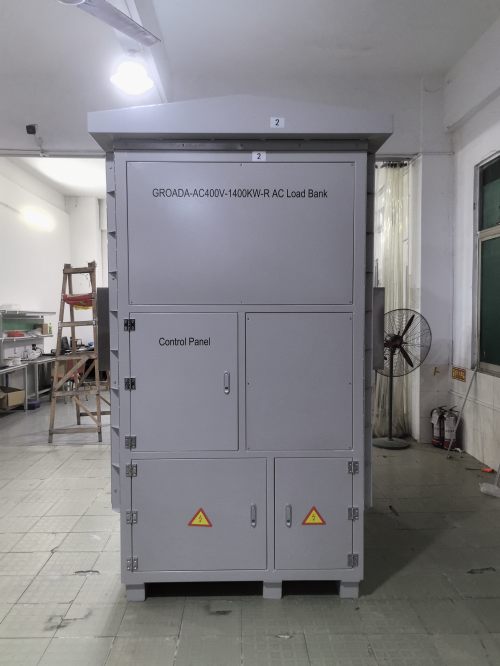
Key technical features include automatic power adjustment via Modbus or Ethernet communication, thermal protection systems with temperature sensors, and remote monitoring capabilities for unattended operations. Safety standards such as IEC 60034-1 and UL 1008 ensure proper grounding, overvoltage/undervoltage protection, and emergency stop functions. These devices are typically built in IP54-rated enclosures with forklift pockets and lifting eyes for easy transport across job sites.
In an anonymized case study involving a 500 kW diesel generator used in a mining operation, portable load bank testing revealed inconsistent voltage regulation at partial loads due to faulty AVR settings. After adjusting the regulator based on load bank data, efficiency improved by 7%, reducing fuel consumption and extending engine life. This demonstrates how regular load testing prevents unexpected failures and ensures long-term operational reliability.
Conclusion: Portable load banks are not just diagnostic tools—they are critical components of any proactive maintenance strategy. With modern digital control interfaces, standardized compliance, and proven field results, they enable operators to validate generator performance before it matters most: during actual grid connection or emergency use.