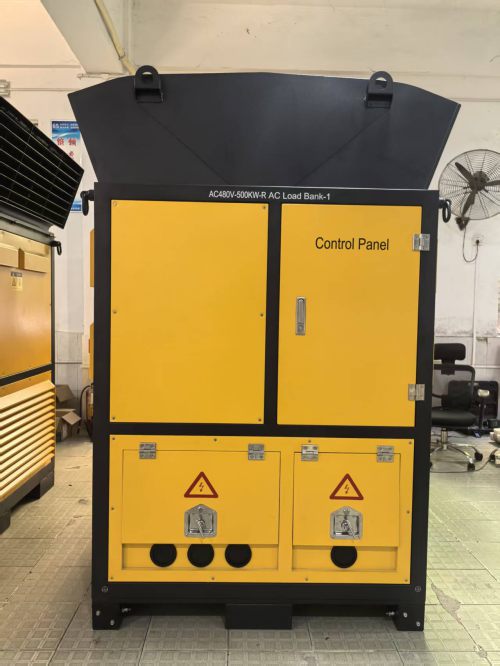
Large Load Banks for Industrial Power Testing and Generator Validation
Large load banks are essential testing equipment used in industrial, commercial, and utility environments to simulate real-world electrical loads on generators, transformers, and power systems. These systems enable engineers to verify performance under full or partial load conditions before commissioning or during routine maintenance. Unlike small portable units, large load banks typically handle capacities from 500 kW up to several megawatts and are often three-phase, air-cooled, or water-cooled systems designed for permanent installation or heavy-duty mobile use.
The primary function of a large load bank is to validate generator capacity, test engine response, and ensure proper cooling and fuel system operation—critical for applications like data centers, hospitals, oil & gas facilities, and microgrids. For example, a 1,000 kW resistive load bank can be used to perform a full-load test on a diesel generator over a 4-hour period to assess stability, voltage regulation, and emissions compliance per IEC 60348 standards.
These systems include advanced control interfaces such as Modbus TCP/IP or CAN bus, allowing remote monitoring via SCADA or cloud-based platforms. They also feature safety protections including overtemperature sensors, ground fault detection, emergency stop (E-STOP) buttons, and thermal cutoffs. Compliance with CE, UL, and CCC certifications ensures safe operation across global markets.
Modern large load banks may combine resistive, reactive, and capacitive elements (RLC configuration) to replicate complex power factor profiles found in actual grid connections. This capability is especially useful for testing renewable energy systems like wind farms or solar inverters during grid synchronization.
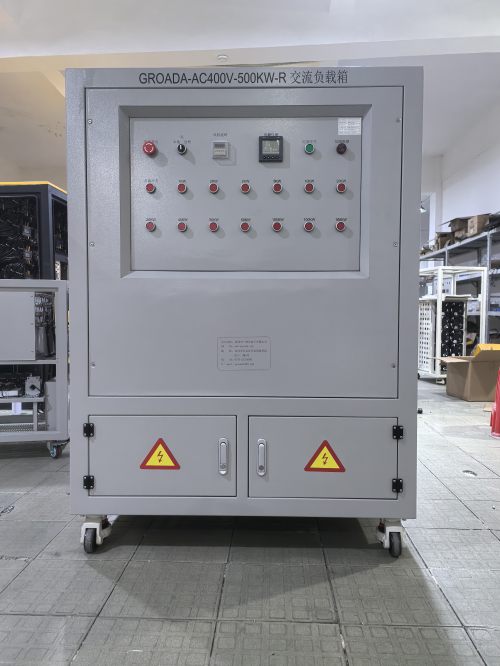
In an anonymized case study at a 2 MW backup power facility, a three-phase resistive-reactive load bank was used to simulate 90% load for 6 hours. The test revealed inconsistent voltage drop due to aging cables, prompting immediate corrective action—avoiding potential downtime during peak demand.
With precise power measurement accuracy (±0.5% for active/reactive power), robust chassis construction (IP54 rating), and modular design for scalability, large load banks are indispensable tools for ensuring reliable power infrastructure. Regular calibration every 12 months using NIST-traceable equipment maintains long-term reliability.