Portable Load Bank Testing for Generator and UPS Systems: A Technical Guide for Engineers
Portable load banks are essential tools in the testing, commissioning, and maintenance of electrical power systems such as diesel generators, uninterruptible power supplies (UPS), and renewable energy inverters. These devices simulate real-world electrical loads to verify system performance under various operating conditions—ensuring reliability, safety, and compliance with international standards like IEC 60034-1 and IEEE 1159.
A portable load bank typically consists of resistive, reactive, or combined (RLC) components that can be adjusted to mimic the behavior of actual connected equipment. Resistive load banks convert electrical energy into heat using precision resistor elements, making them ideal for evaluating generator output capacity, engine cooling, and fuel efficiency. Reactive load banks, on the other hand, introduce inductive or capacitive reactance to test voltage regulation, excitation systems, and harmonic distortion—critical for applications involving motor drives or electronic loads. Combined load banks offer both resistive and reactive capabilities, allowing engineers to perform comprehensive load tests that replicate complex real-world scenarios.
The design of modern portable load banks prioritizes mobility, ruggedness, and intelligent control. Units often feature IP54-rated enclosures for protection against dust and water ingress, aluminum chassis for lightweight portability, and integrated digital controllers that monitor temperature, current, voltage, and power factor. Many models include remote monitoring via Ethernet or wireless interfaces, enabling operators to adjust load levels without physical access to the unit—an important feature for high-risk environments such as industrial facilities or offshore platforms.
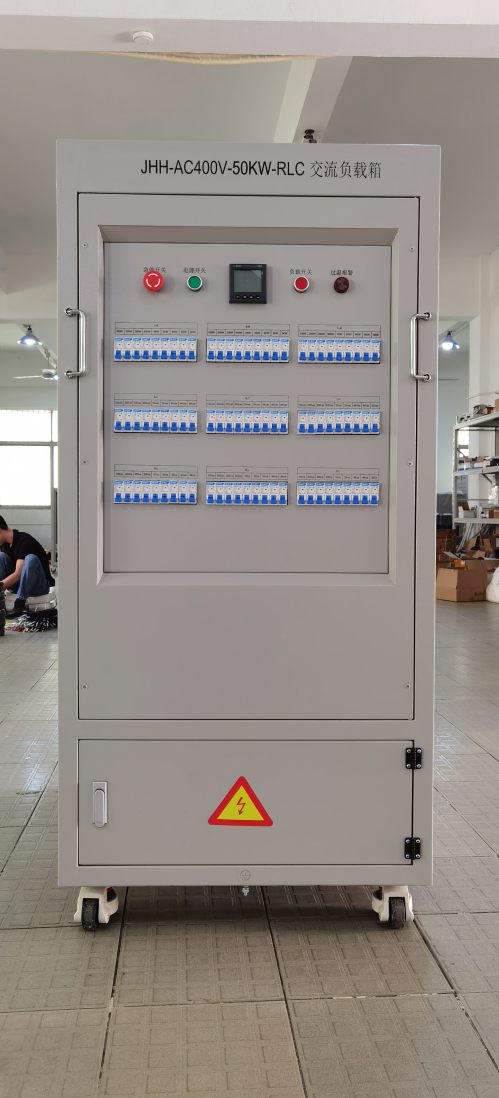
Safety is a primary concern in load bank operations. All units must meet strict electrical safety standards, including CE, UL, and CCC certifications depending on regional markets. Key protective features include ground fault detection, over-temperature sensors, emergency stop (E-STOP) buttons, short-circuit protection, and automatic shutdown during abnormal voltage or frequency deviations. Proper grounding of the entire test setup is mandatory, as per IEC 60364-1, to prevent electric shock hazards and ensure stable operation.
Calibration plays a crucial role in maintaining measurement accuracy. Most manufacturers recommend annual calibration using traceable standards, with procedures aligned to ISO/IEC 17025 guidelines. Calibration should verify both active and reactive power measurements across the full range of load settings. Consumable parts such as resistors and fans require periodic inspection—typically every 12–18 months based on usage intensity—and replacement when signs of wear appear, such as increased resistance tolerance or reduced airflow.
One notable application involves factory acceptance testing (FAT) of large diesel generators. In a simulated example from a wind farm project in Northern Europe, a 2 MW three-phase resistive load bank was used to test a generator before installation. The test ran continuously at 100% load for four hours, confirming stable voltage regulation within ±2%, adequate cooling system performance, and absence of harmonic distortion above acceptable limits. This allowed early detection of a faulty governor response, which was corrected prior to site deployment—avoiding costly delays.
Another case study involved UPS load testing in a data center located in Singapore. A portable RLC load bank was employed to simulate a mixed IT load profile (resistive + inductive). The test revealed that the UPS’s inverter phase angle compensation needed adjustment to maintain power quality during transitions between battery and mains power. This correction ensured seamless failover performance, meeting Tier III redundancy requirements for mission-critical infrastructure.
In addition to routine testing, portable load banks support grid integration studies for microgrids and solar farms. By simulating varying load profiles and switching events, engineers can validate control algorithms, stability margins, and islanding detection mechanisms required by utility interconnection standards such as IEEE 1547.
When selecting a portable load bank, consider key specifications: maximum load capacity (in kW or kVA), number of phases (single or three-phase), load type (resistive, reactive, or both), portability features (wheels, lifting points), and environmental rating (IP classification). For instance, a 150 kW resistive-only unit might weigh around 150 kg and fit inside a standard shipping container, while a 500 kVA combined RLC model may exceed 600 kg and require fork-lift handling.
To maximize return on investment, users should adopt preventive maintenance practices: clean air filters monthly, inspect connections quarterly, and store units in dry, ventilated spaces when not in use. Regular software updates (where applicable) also enhance functionality and compatibility with newer SCADA systems.
In conclusion, portable load banks are indispensable for ensuring the operational integrity of backup power systems. Whether conducting generator FATs, validating UPS performance, or supporting renewable energy grid integration, these tools provide actionable insights grounded in precise engineering data. Their flexibility, robust design, and adherence to global safety standards make them an essential asset for any power systems engineer, technician, or facility manager responsible for critical infrastructure.