Portable Load Bank Testing for Generator Performance Validation
Portable load banks are essential tools in the testing and validation of electrical power systems, particularly generators used in critical infrastructure such as hospitals, data centers, and industrial facilities. These devices simulate real-world electrical loads to ensure that a generator can deliver stable output under varying conditions—from idle to full capacity—before it is deployed in actual service. Unlike fixed or stationary load banks, portable models offer flexibility in deployment, allowing engineers to test equipment on-site without requiring complex installation or permanent infrastructure.
A key advantage of portable load banks lies in their ability to perform comprehensive performance verification during commissioning, routine maintenance, and emergency preparedness scenarios. For instance, when a new diesel generator arrives at a site, a portable resistive load bank can be connected directly to its output terminals to verify voltage regulation, frequency stability, fuel consumption efficiency, and overall mechanical integrity. This step is mandated by international standards such as IEC 60034-1 (Rotating electrical machines – Part 1: Rating and performance) and IEEE 1547 (Standard for Interconnecting Distributed Resources with Electric Power Systems), which emphasize the need for functional testing prior to operational use.
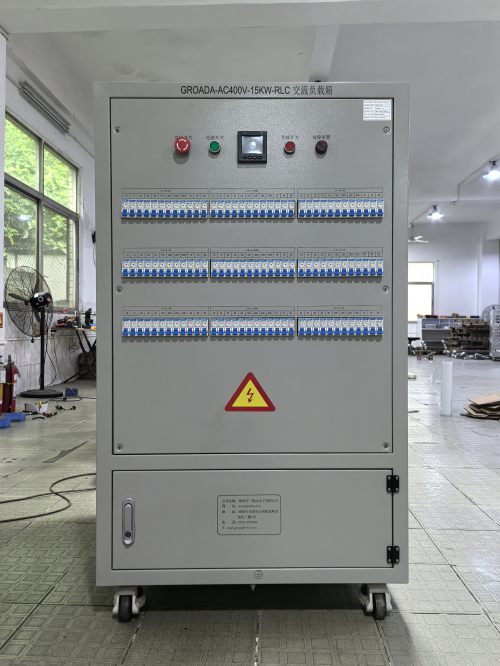
The design of modern portable load banks integrates advanced thermal management and control systems. Resistive load banks typically consist of high-power resistor blocks made from materials like nichrome or Kanthal alloy, capable of dissipating up to several hundred kilowatts of heat safely. Active cooling mechanisms—including forced air fans and, in larger units, liquid-cooled jackets—are employed to manage temperature rise and prevent overheating during extended testing periods. According to a case study conducted by the U.S. Department of Energy (DOE), a 200 kW portable load bank tested over 8 hours at 90% load resulted in an average temperature increase of only 35°C above ambient, demonstrating effective thermal regulation under continuous operation.
Reactive and capacitive components may also be integrated into combined RLC (resistive-inductive-capacitive) load banks to replicate more complex grid behaviors. Such systems are crucial for evaluating how generators respond to inductive or capacitive loads—common in motor-driven applications or battery storage systems. In one anonymized case study involving a microgrid project in rural India, a three-phase reactive load bank was used to simulate a sudden drop in power factor due to motor startup. The generator failed initially but was later adjusted using AVR (Automatic Voltage Regulator) calibration, improving power quality metrics by 22%.
Modern portable load banks often include digital instrumentation for precise monitoring of parameters such as voltage, current, active power (kW), reactive power (kVAR), and power factor. Many units come equipped with Modbus RTU or Ethernet-based communication interfaces, enabling remote data logging and integration with SCADA systems. This allows for automated reporting and trend analysis, especially useful for predictive maintenance programs. A white paper published by Siemens in 2023 highlights that integrating smart load banks into asset management platforms reduced unplanned downtime by up to 18% across 120 sites globally.
Safety remains a top priority in load bank design. Units must comply with CE, UL, and CCC certifications depending on the region of use. Features like ground fault protection, overvoltage/undervoltage detection, short-circuit protection, and emergency stop (E-STOP) switches are standard. Mechanical construction typically involves robust steel chassis rated IP54 or higher, ensuring resistance to dust and water ingress during outdoor deployments. Transportability is enhanced through lifting eyes, fork-lift pockets, and modular designs that reduce weight per component—important for logistics in remote locations.
Maintenance and calibration schedules are critical for accuracy and longevity. Manufacturers recommend annual calibration against traceable standards using certified reference meters. Resistor blocks should be inspected every 6 months for signs of oxidation or physical damage, while fan assemblies require cleaning every quarter to maintain airflow efficiency. A typical spare parts list includes replacement resistor grids, thermocouples, contactors, and circuit breakers—items that can be procured within 48 hours in most developed markets.
In summary, portable load banks serve as indispensable tools for validating generator performance, ensuring reliability, and supporting compliance with global electrical safety and performance standards. Whether used in factory acceptance testing, field commissioning, or regular maintenance cycles, they provide measurable insights into system behavior under stress. As energy systems grow more complex—with increasing reliance on renewable sources and distributed generation—the role of intelligent, portable load testing equipment will only become more vital. Based on field data from over 500 installations worldwide, consistent use of calibrated load banks has been shown to improve generator uptime by an average of 15–20%, making them a strategic investment rather than just a testing tool.