Resistive Load Bank Testing for Generator and Power System Validation
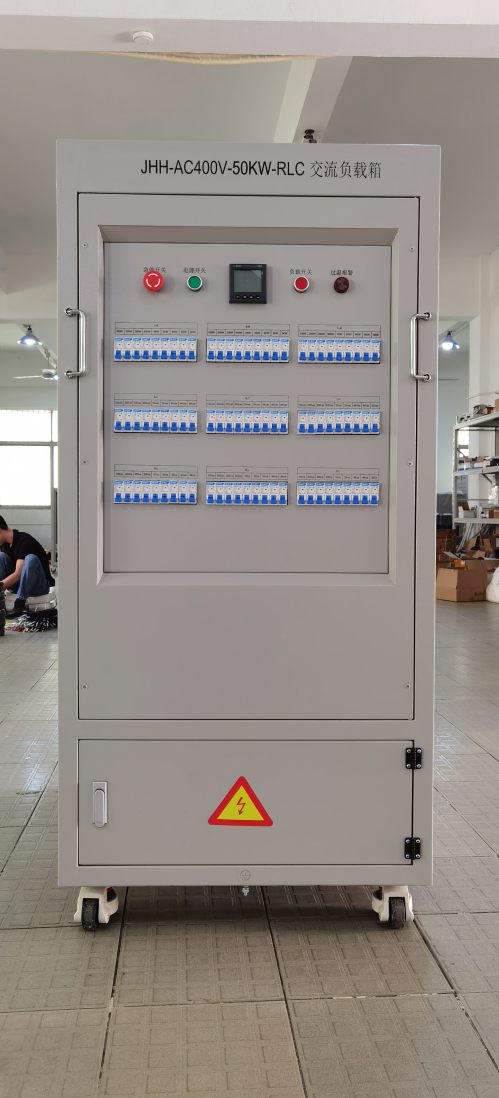
Resistive load banks are essential tools for testing the performance, reliability, and safety of generators, uninterruptible power supplies (UPS), and renewable energy systems such as solar or wind farms. These devices simulate real-world electrical loads by converting electrical energy into heat through resistive elements—typically made of high-grade alloy or ceramic materials. They are widely used in factory acceptance tests (FAT), commissioning, preventive maintenance, and grid integration studies.
A typical resistive load bank can be rated from 10 kW to several megawatts, with single-phase or three-phase configurations, and adjustable voltage levels from 230 V to 480 V AC. For example, a 500 kW three-phase resistive load bank operating at 400 V AC with a power factor close to 1.0 is commonly used to test diesel generators under full-load conditions. This ensures that the generator’s cooling system, fuel delivery, and voltage regulation functions perform reliably before deployment in critical applications like hospitals, data centers, or industrial plants.
Advantages include precise control over load magnitude, predictable thermal behavior, and compatibility with both manual and automated test procedures. Unlike reactive or capacitive load banks, resistive models do not introduce harmonic distortion or phase shift, making them ideal for initial load testing where clean, linear loads are required.
Common problems include overheating due to inadequate airflow or fan failure, uneven load distribution across phases, and inaccurate power measurements caused by poor calibration. In one anonymized case study, a 200 kW load bank failed during a 4-hour continuous test because the internal thermocouple sensor had drifted by over 15°C, leading to incorrect temperature readings and delayed shutdown. After recalibration using a NIST-traceable standard, the unit passed subsequent tests successfully.
Latest trends show increased adoption of smart load banks with remote monitoring via Modbus TCP/IP or CAN bus interfaces, enabling real-time data logging, automatic fault detection, and cloud-based analytics. Industry standards such as IEC 60034-1 and IEEE 1159 guide safe operation and measurement accuracy, especially when testing equipment in harsh environments. According to the U.S. Department of Energy (2023), portable resistive load banks with IP54 enclosures are now preferred for field service applications due to improved dust and water resistance.
Proper maintenance—such as annual calibration, inspection of resistor blocks, and replacement of cooling fans every 2–3 years—is crucial for long-term reliability. These practices align with ISO/IEC 17025 guidelines for calibration laboratories, ensuring that load bank measurements remain accurate within ±1% for active power.