Understanding Load Bank Testing for Generator Performance Validation
Load bank testing is a critical process used to verify the performance, reliability, and safety of electrical power systems such as generators, UPS units, and renewable energy inverters. It simulates real-world electrical loads under controlled conditions, allowing engineers to assess system behavior without relying on actual site demands. This method ensures that power equipment operates efficiently across varying load profiles—from no-load to full-load—and helps identify potential issues before deployment.
The main body of load bank testing includes three primary types: resistive, reactive, and combination (RLC) load banks. Resistive load banks convert electrical energy into heat using precision resistor blocks and are ideal for testing mechanical engines, cooling systems, and fuel consumption under steady-state loads. Reactive load banks, often inductive or capacitive, simulate the effects of motors, transformers, and other inductive/capacitive loads—critical for evaluating generator voltage regulation and excitation system response. RLC load banks combine both features, offering comprehensive testing for complex power systems like microgrids or data centers where both active and reactive power must be managed.
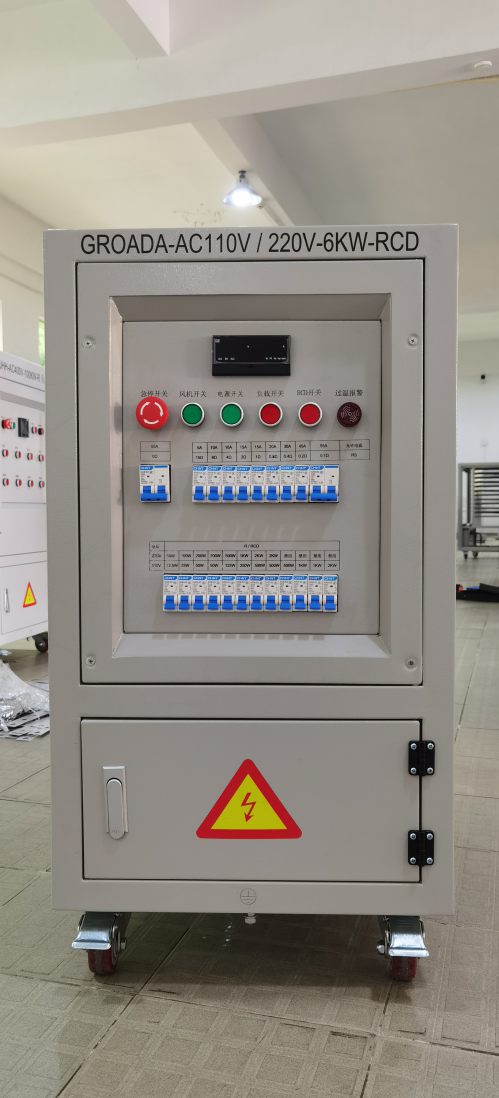
Modern load banks incorporate advanced control and monitoring capabilities, including digital displays, remote communication via Modbus or Ethernet, and automatic load ramping. Safety features such as overtemperature protection, emergency stop functions, and grounding compliance with IEC 60364 standards ensure safe operation. Thermal management is handled through forced air cooling or water-cooled systems, depending on the load capacity and portability requirements. For example, portable single-phase load banks may range from 5–50 kW, while three-phase models can exceed 1,000 kVA.
Case studies demonstrate the value of load bank testing. In one simulated application, a 500 kVA diesel generator underwent factory acceptance testing with a resistive load bank at 100% rated load for 2 hours. The test confirmed stable voltage regulation within ±2%, consistent engine RPM, and proper cooling fan activation. Another anonymized case involved a wind farm’s grid connection test using an RLC load bank, which revealed harmonic distortion issues at partial load—prompting filter adjustments before commissioning.
In conclusion, load bank testing provides a scientifically validated approach to ensuring electrical system readiness. Whether for new installations, routine maintenance, or certification, it supports operational confidence, reduces downtime, and enhances long-term asset performance.