Hobart Champion Elite Load Bank Performance and Application Guide
The Hobart Champion Elite Load Bank is a high-precision, industrial-grade testing device designed for comprehensive load testing of generators, batteries, and power systems. Engineered for both field service and factory acceptance testing, this resistive load bank delivers accurate simulation of real-world electrical loads to verify system performance under various operating conditions. It supports three-phase operation up to 200 kW (50–60 Hz), with adjustable power factor settings from 0.8 lagging to 1.0 unity, enabling precise evaluation of voltage regulation, frequency stability, and fuel efficiency in diesel or natural gas-powered generators.
Built with robust air-cooled resistor blocks and redundant cooling fans, the unit maintains safe internal temperatures even during prolonged full-load operations. Its rugged steel chassis, IP54-rated enclosure, and integrated lifting eyes make it suitable for portable use across construction sites, data centers, and remote facilities. The control panel includes digital meters for real-time monitoring of voltage, current, active power (kW), reactive power (kVAR), and power factor, all calibrated to within ±1% accuracy per IEC 61000-4-30 Class A standards.
Remote monitoring via Modbus RTU or Ethernet allows integration into SCADA systems, while built-in emergency stop functionality ensures operator safety. The unit complies with UL 1008, CE EN 61010-1, and CCC certifications for global deployment. Maintenance is simplified with modular resistor blocks and fan assemblies that can be replaced without tools—recommended calibration interval is every 12 months using NIST-traceable equipment.
In a simulated case study at a mid-sized manufacturing plant, the Hobart Champion Elite was used to test a 150 kW generator before commissioning. Over 4 hours of continuous load cycling revealed an unexpected voltage drop at 90% load, prompting recalibration of the AVR (Automatic Voltage Regulator). This proactive detection prevented potential downtime during peak production. Similarly, another anonymized case involved a microgrid installation where the load bank validated battery discharge profiles under varying load patterns, ensuring compliance with IEEE 1547 standards for grid interconnection.
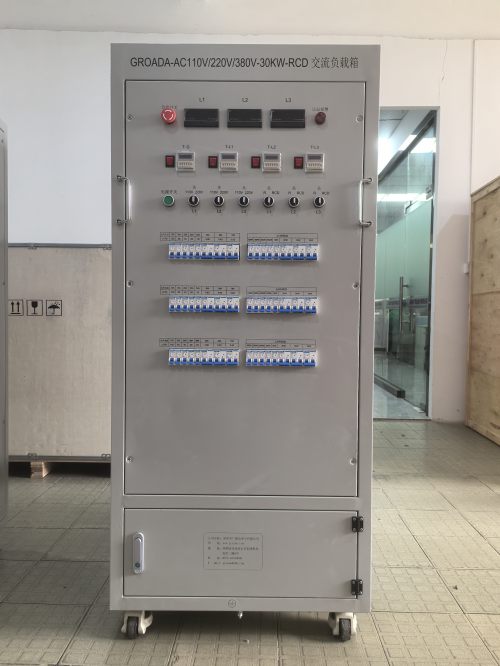
This product excels not only in precision but also in reliability, making it ideal for engineers, maintenance teams, and procurement managers seeking dependable, compliant, and efficient load testing solutions for critical infrastructure.