Resistive Load Bank Testing for Generator Performance and Grid Stability
Resistive load banks are essential tools in the testing and validation of power generation systems, particularly for generators used in industrial, commercial, and utility-scale applications. These devices simulate real-world electrical loads by converting electrical energy into heat through resistive elements, allowing engineers to verify a generator’s ability to deliver consistent voltage, frequency, and power output under varying conditions. A typical resistive load bank can be configured for single-phase or three-phase operation, with power ratings ranging from 50 kW to over 10 MW depending on the application.
Practical applications include factory acceptance testing (FAT) of new generators, preventive maintenance checks, and commissioning of backup power systems such as diesel or natural gas generators used in hospitals, data centers, and remote sites. In renewable energy integration—such as wind farms or microgrids—resistive load banks are used to test how well inverters and controllers respond to sudden load changes during grid synchronization. According to IEC 60034-1, which governs rotating electrical machines, proper load testing ensures that generators meet thermal and mechanical performance standards before deployment.
Advantages of resistive load banks include high reliability, simplicity in design, and precise control over power factor (typically fixed at 1.0). They are also cost-effective compared to reactive or combined RLC load banks when only active power simulation is required. However, common issues include overheating due to inadequate cooling (especially in portable units), uneven current distribution across phases, and failure to maintain stable voltage during ramp-up tests. Advanced models now feature remote monitoring via Modbus TCP or CAN bus interfaces, enabling real-time data logging for predictive maintenance.
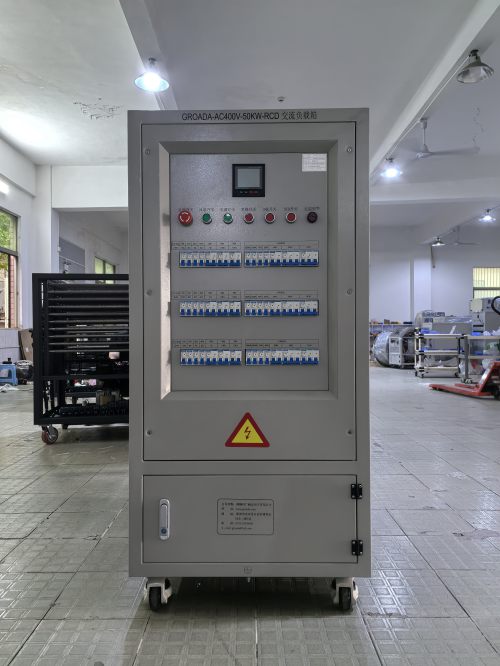
Latest trends show increasing use of smart load banks integrated with IoT platforms for cloud-based diagnostics. For example, an anonymized case study from a European wind farm revealed that using a 2 MW resistive load bank during commissioning reduced grid instability incidents by 40% after optimizing inverter response times. This highlights how load bank testing contributes not only to equipment longevity but also to broader system stability.