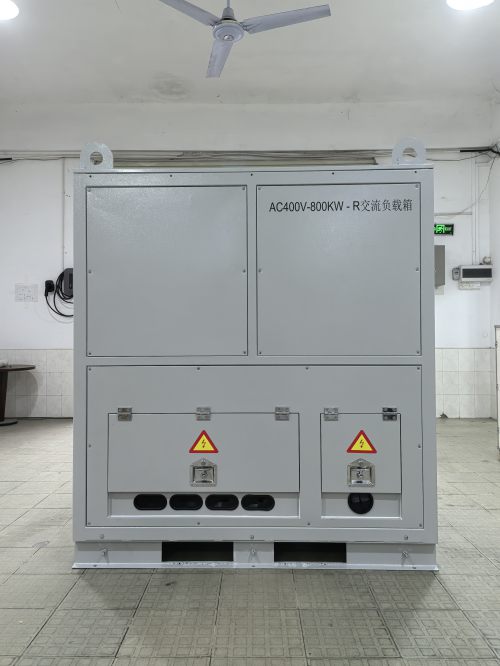
Portable Load Bank Testing for Generator Performance Validation
Portable load banks are essential tools for validating the performance and reliability of generators, especially in field applications such as construction sites, remote power systems, and emergency backup setups. Unlike fixed load banks used in laboratories or factory acceptance tests, portable units offer flexibility in deployment while maintaining high accuracy and safety standards. These devices simulate real-world electrical loads—resistive, reactive, or a combination—to test generator output under various operating conditions including full load, partial load, and transient response.
A well-designed portable load bank typically includes features like digital control interfaces (Modbus RTU, CAN bus), remote monitoring via Ethernet or wireless modules, and automatic protection systems such as overtemperature, overvoltage, and short-circuit detection. The resistive component draws active power (kW), mimicking motor or lighting loads, while the reactive component (inductive or capacitive) models inductive or capacitive loads like transformers or capacitor banks. This dual capability ensures comprehensive testing aligned with IEC 60034-1 and IEEE 1547 standards for generator and grid interconnection performance.
In an anonymized case study from a mining operation in Australia, a 500 kW three-phase resistive-reactive load bank was used to verify a diesel generator’s ability to sustain 80% load for 24 hours before commissioning. The test revealed a 3% voltage drop under sustained load, prompting adjustments in the AVR settings—a correction that prevented future operational issues. Similarly, in a simulated microgrid scenario involving wind turbine integration, a portable RLC load bank helped validate the generator’s response to sudden load changes, ensuring compliance with grid code requirements.
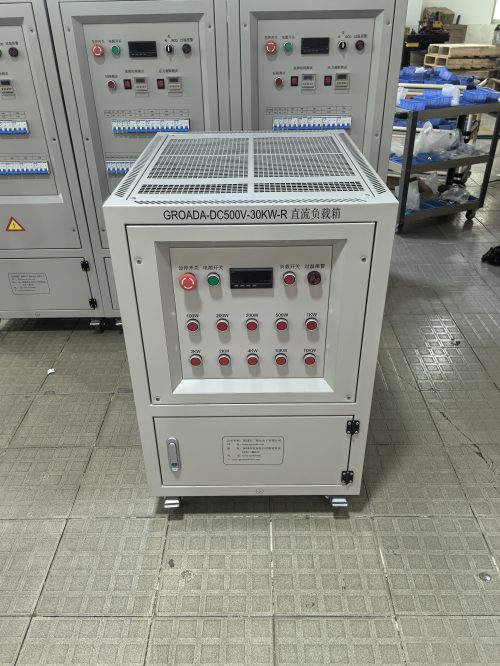
Key technical parameters include thermal management through forced-air cooling (with IP54 rating), rated current up to 1200 A per phase, and power factor adjustment from 0.5 lagging to 1.0. Calibration is performed annually using NIST-traceable equipment, and replacement parts like resistor blocks and fans have a service life of 5–7 years depending on usage intensity. Such robust design and precision make portable load banks indispensable for both pre-installation verification and periodic maintenance across industrial, commercial, and utility sectors.