Portable Load Bank Testing Solutions for Generator and Power System Validation
In modern power systems—from industrial facilities to remote renewable energy sites—reliable performance of generators, UPS systems, and microgrids is critical. A key validation step in ensuring this reliability is load bank testing, which simulates real-world electrical loads to verify that power sources can perform under actual operating conditions. Among the various types of load banks available, portable resistive, reactive, and combination (RLC) load banks have become essential tools for engineers, technicians, and maintenance teams across industries.
A portable load bank allows for flexible, on-site testing without requiring permanent infrastructure or extensive setup. These units are typically designed with robust enclosures, efficient cooling mechanisms (air- or water-cooled), and intelligent control interfaces such as Modbus, Ethernet, or CAN bus communication protocols. Their portability makes them ideal for factory acceptance tests (FAT), commissioning of new installations, routine preventive maintenance, and emergency readiness checks.
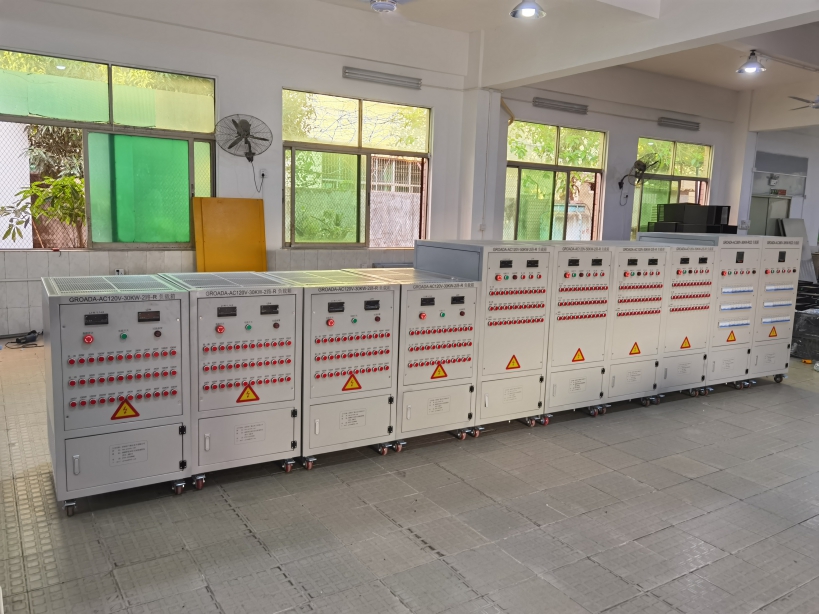
The core function of a resistive load bank is to convert electrical energy into heat through resistors—mimicking the behavior of real-world resistive loads like lighting, heating elements, or motor drives. This type of testing is commonly used to evaluate generator capacity, fuel system response, and cooling efficiency. For example, during a 3-phase resistive load test at 100% rated load for 2 hours, one manufacturer observed that a diesel generator maintained stable voltage regulation within ±2%, confirming its suitability for continuous operation.
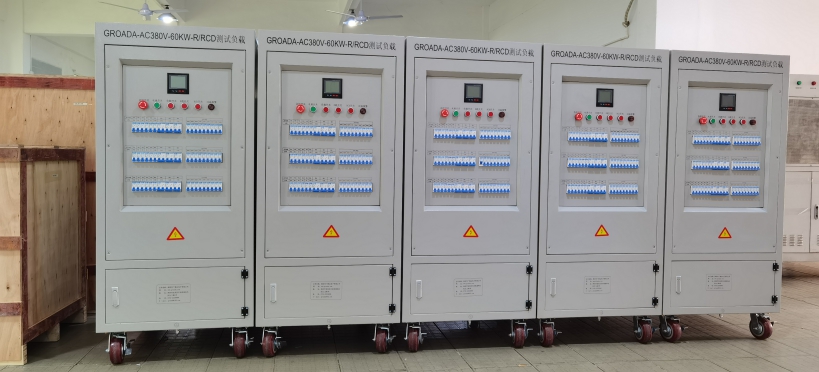
Reactive load banks introduce inductive or capacitive reactance to simulate the lagging or leading power factor characteristics found in motors, transformers, and industrial machinery. They are particularly important for testing excitation systems in synchronous generators and validating reactive power compensation devices in distribution networks. According to IEC 60034-1, the standard for rotating electrical machines, proper excitation control must be verified under varying load conditions—including both resistive and reactive components—to ensure compliance with insulation class and temperature rise limits.
Combination (RLC) load banks offer the most comprehensive testing capability by simultaneously applying resistive, inductive, and capacitive loads. These are widely used in grid interconnection studies for wind farms, solar PV plants, and battery storage systems where dynamic power factor correction is required. In an anonymized case study from a utility-scale solar project in Germany, a three-phase RLC load bank was used to validate the inverter’s ability to maintain a power factor between 0.85 lagging and 0.95 leading across multiple load steps. The results showed that the system met all IEEE 1547 requirements for voltage regulation and harmonic distortion (<5%).
Key technical parameters for portable load banks include rated power (from 10 kW up to 2 MW), phase configuration (single or three-phase), current range (up to several hundred amperes), and thermal protection systems. Cooling methods vary based on size and application: air-cooled units rely on forced convection fans (typically 50–100 dB(A)), while water-cooled models use closed-loop chiller systems for higher power densities. Temperature rise is carefully monitored via thermocouples embedded in resistor blocks; safety standards like UL 1004 and CE EN 61010 require automatic shutdown if internal temperatures exceed safe thresholds (e.g., >150°C).
Modern portable load banks often integrate digital measurement systems capable of logging voltage, current, active power (kW), reactive power (kVAR), apparent power (kVA), and power factor (PF). Accuracy is typically ±0.5% of full scale for all parameters—a requirement aligned with IEEE Std 1159 for power quality measurements. Remote monitoring via SCADA or cloud-based platforms enables real-time diagnostics, fault detection, and predictive maintenance planning.
Safety features are equally critical. Grounding terminals, short-circuit protection relays, overvoltage/undervoltage trip circuits, and emergency stop buttons must comply with local regulations (UL in North America, CE in Europe). Units should also feature IP54-rated enclosures to protect against dust and splashing water, especially in outdoor applications. Maintenance intervals for consumable parts—such as resistor blocks and fan assemblies—are usually recommended every 500–1000 hours of operation, depending on ambient conditions and duty cycle.
Calibration of load bank instrumentation is mandatory for accuracy verification and regulatory compliance. Most manufacturers recommend annual calibration using traceable reference standards (e.g., NIST-traceable calibrators). Spare parts inventories should include replacement resistor modules, thermal fuses, and control boards—especially for high-utilization environments like mining operations or military bases.
Case Study 1 – Factory Acceptance Test for a 500 kW Diesel Generator
A generator manufacturer in the U.S. conducted FAT using a portable 3-phase resistive load bank rated at 500 kW. Tests included 50%, 75%, and 100% load steps for 30 minutes each, followed by a 1-hour 100% load run. Voltage stability remained within ±1.5%, and oil temperature rose from 70°C to 88°C—an acceptable increase per ISO 8528-1. No anomalies were detected in engine speed or exhaust gas temperature, confirming successful commissioning.
Case Study 2 – Microgrid Grid-Connection Testing in Australia
An Australian renewable energy developer used a portable RLC load bank to test a 200 kW hybrid solar + battery system before connecting to the main grid. The test simulated fluctuating load profiles (0–100%) over 6 hours, with simultaneous adjustment of reactive power to maintain PF at 0.95. The system demonstrated no voltage sags or harmonics exceeding 3% THD, satisfying AEMO (Australian Energy Market Operator) grid code requirements.
Portable load banks are not only essential for pre-commissioning but also for ongoing operational assurance. With increasing reliance on distributed generation and smart grids, their role will expand into areas like frequency regulation, transient response testing, and cyber-physical system validation. Engineers who understand how to select, operate, and interpret data from these instruments are better positioned to deliver resilient, compliant, and cost-effective power solutions worldwide.