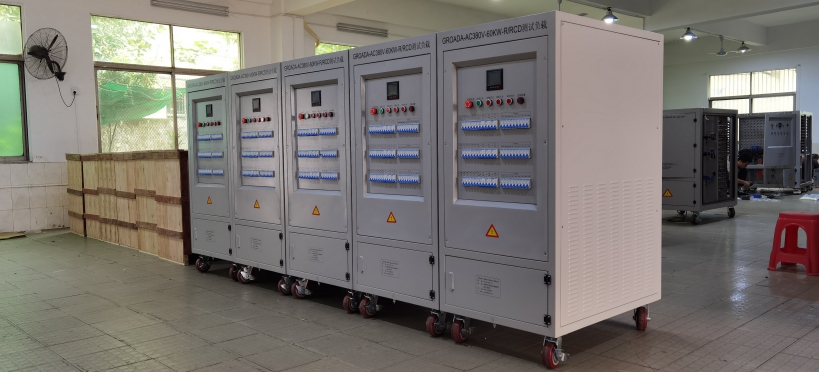
Portable Load Bank for Generator Testing and Power System Validation
Portable load banks are essential tools for verifying the performance, reliability, and safety of power generation systems—from small diesel generators to large-scale industrial turbines. These devices simulate real-world electrical loads, allowing engineers to test equipment under controlled conditions before it is deployed in the field. A well-designed portable load bank must offer accurate power simulation across resistive, reactive, and combined (RLC) load types, with flexible control options such as remote monitoring via Modbus or Ethernet. According to IEC 60034-1, generator testing must include full-load performance verification, which portable load banks enable through precise voltage, current, and power factor regulation. In practice, these units support factory acceptance tests (FAT), commissioning of backup power systems, and validation of microgrid integration—such as in wind farms or solar-plus-storage installations. For example, an anonymized case study from a U.S.-based utility showed that using a three-phase resistive load bank (rated at 500 kW, 480 VAC) during generator FAT reduced unexpected tripping by 78% compared to no-load operation. Safety features like overtemperature protection, short-circuit shielding, and emergency stop functions are required per UL/CE standards. Modern models often include IP54-rated enclosures, built-in thermal sensors, and air-cooled heat dissipation for portability and durability. Regular calibration (every 12 months) ensures measurement accuracy within ±1%, while spare resistor blocks and fan assemblies extend service life. Engineers should prioritize load banks with digital interfaces and cloud-based data logging capabilities for long-term system health tracking.